A review of air-ice chemical and physical interactions (AICI): liquids, quasi-liquids, and solids in snow
Abstract: Snow in the environment acts as a host to rich chemistry and provides a
matrix for physical exchange of contaminants within the ecosystem. The
goal of this review is to summarise the current state of knowledge of
physical processes and chemical reactivity in surface snow with
relevance to polar regions. It focuses on a description of impurities in
distinct compartments present in surface snow, such as snow crystals,
grain boundaries, crystal surfaces, and liquid parts. It emphasises the
microscopic description of the ice surface and its link with the
environment. Distinct differences between the disordered air–ice
interface, often termed quasi-liquid layer, and a liquid phase are
highlighted. The reactivity in these different compartments of surface
snow is discussed using many experimental studies, simulations, and
selected snow models from the molecular to the macro-scale.
Although new experimental techniques have extended our knowledge of the
surface properties of ice and their impact on some single reactions and
processes, others occurring on, at or within snow grains remain
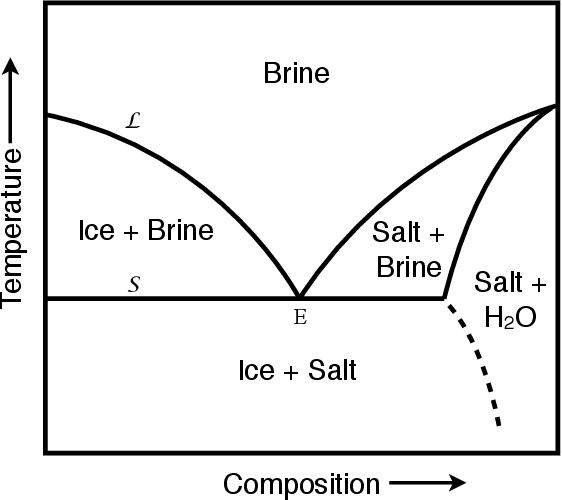
unquantified. The presence of liquid or liquid-like compartments either
due to the formation of brine or disorder at surfaces of snow crystals
below the freezing point may strongly modify reaction rates. Therefore,
future experiments should include a detailed characterisation of the
surface properties of the ice matrices. A further point that remains
largely unresolved is the distribution of impurities between the
different domains of the condensed phase inside the snowpack, i.e. in
the bulk solid, in liquid at the surface or trapped in confined pockets
within or between grains, or at the surface. While surface-sensitive
laboratory techniques may in the future help to resolve this point for
equilibrium conditions, additional uncertainty for the environmental
snowpack may be caused by the highly dynamic nature of the snowpack due
to the fast metamorphism occurring under certain environmental
conditions.
Due to these gaps in knowledge the first snow
chemistry models have attempted to reproduce certain processes like the
long-term incorporation of volatile compounds in snow and firn or the
release of reactive species from the snowpack. Although so far none of
the models offers a coupled approach of physical and chemical processes
or a detailed representation of the different compartments, they have
successfully been used to reproduce some field experiments. A fully
coupled snow chemistry and physics model remains to be developed.


Comments
Post a Comment